
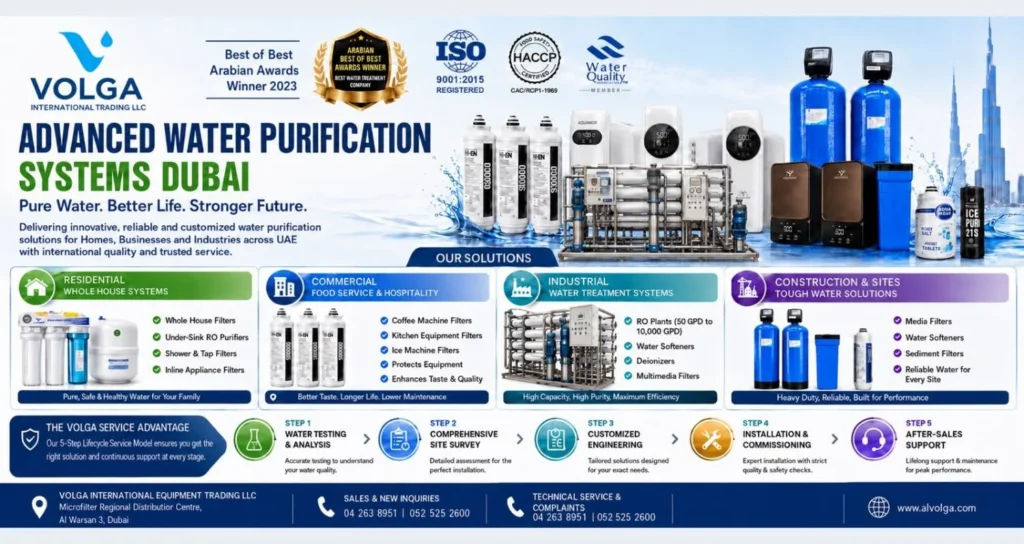
Clean water is an essential part of everyday life, from drinking and cooking to bathing and cleaning. While water supplied to properties in Dubai is treated, its quality at the tap can also depend on storage tanks, internal plumbing, and the condition of the water distribution system within a building.
Choosing the right residential water treatment systems in Dubai can help homeowners address specific water quality concerns, improve water taste, reduce unwanted particles, and manage hard water problems. At Al Volga International, homeowners can explore residential water filtration and purification solutions designed around their property and water requirements.
In this guide, we explain the different types of home water treatment systems, their benefits, and how to choose a suitable solution for your apartment or villa in Dubai.
Why Do Homes in Dubai Need Water Treatment Systems?
Water quality requirements can vary between properties. Even when the incoming water has been treated, water stored in a building’s tank or transported through internal plumbing may require additional attention.
Homeowners may notice issues such as:
- Unpleasant chlorine taste or odour.
- Sediment, rust particles, or visible impurities.
- White scale deposits on taps, shower screens, and bathroom fittings.
- Mineral buildup affecting water heaters and household appliances.
- Concerns about drinking water quality and the condition of storage tanks.
The appropriate solution depends on the source of the problem. For example, a sediment filter can help capture suspended particles, while a water softener is designed to address hardness minerals. A reverse osmosis system can provide additional treatment for drinking water when its technology is suitable for the water being treated.
Water testing and an assessment of your property’s plumbing can help identify which treatment method is appropriate.
Types of Residential Water Treatment Systems in Dubai
Different water treatment technologies serve different purposes. Understanding these options can help you select a system based on your household’s needs rather than purchasing equipment that may not be necessary.
1. Whole-House Water Filtration Systems
A whole-house water filtration system is generally installed on the main water supply line entering a property. It treats incoming water before it reaches connected taps, showers, and other outlets.
Depending on the filter media and system configuration, whole-house filtration can help reduce sediment, rust particles, turbidity, chlorine, or certain other unwanted substances.
These systems are worth considering for:
- Villas and townhouses.
- Residential apartments where installation is feasible.
- Homes experiencing sediment or water clarity concerns.
- Households looking for filtration across multiple water outlets.
The filtration stages should be selected according to water quality, flow requirements, and the contaminants that need to be addressed.
Explore Al Volga’s whole-house water filtration solutions to learn more about residential filtration options.
2. Reverse Osmosis (RO) Water Purification Systems
Reverse osmosis is a membrane-based water purification technology commonly used for drinking and cooking water. An RO system pushes water through a specialised membrane to reduce many dissolved substances and other contaminants, depending on the system design.
Residential RO systems are often installed under the kitchen sink or at a dedicated drinking water outlet.
Potential benefits include:
- Reducing selected dissolved salts and contaminants.
- Improving drinking water taste when unwanted substances affect flavour.
- Providing a dedicated source of treated water for drinking and cooking.
- Offering an additional treatment stage alongside suitable pre-filtration.
The exact performance depends on the membrane, system configuration, incoming water quality, and maintenance. RO is not automatically the best choice for every water concern, so testing and professional advice can help determine whether it is suitable.
If you are comparing RO water filter systems in Dubai, consider filtration performance, daily water demand, installation requirements, and replacement filter availability.
3. Residential Water Softeners
Hard water contains elevated levels of minerals, particularly calcium and magnesium. These minerals can contribute to scale deposits on bathroom fittings, inside pipes, and around water-heating equipment.
A water softener typically uses ion-exchange technology to reduce water hardness. This can help control scale formation and improve the performance of certain household appliances.
Common benefits include:
- Less mineral scale on taps and shower screens.
- Reduced hardness-related buildup in water heaters.
- Improved soap lathering and cleaning performance.
- Better protection for plumbing and appliances against scale accumulation.
A water softener is not the same as a drinking water purifier. It primarily addresses hardness, so a separate drinking water treatment system may be appropriate depending on the water quality and household requirements.
4. Sediment and Multimedia Filtration
Sediment filtration helps remove suspended particles such as sand, silt, rust, and dirt. Multimedia filters use different layers of filtration media to capture particles and reduce turbidity.
These systems can be useful as a pre-treatment stage before other equipment, including water softeners, carbon filters, and RO systems.
The right filter size and media depend on incoming water conditions, required flow rate, and the amount of suspended material present.
For properties with storage tanks, periodic inspection and cleaning of the tank, along with appropriate filtration, can form part of an overall water quality management plan.
5. Activated Carbon Water Filters
Activated carbon filters are designed to adsorb certain substances, including chlorine and some organic compounds that can affect water taste and odour.
They can be installed as part of a whole-house filtration arrangement or at a specific point of use, depending on the product.
However, carbon filtration does not remove every dissolved contaminant or guarantee microbiological safety. Always check the manufacturer’s specifications to confirm which substances the filter is designed to reduce.
Whole-House Filtration vs. Under-Sink RO: Which Is Better?
The best option depends on where you need treated water and which water quality issues you want to address.
Whole-house filtration treats water entering the property and can serve multiple outlets. It is often considered when homeowners want to address sediment, chlorine, or other issues throughout the house.
Under-sink RO purification focuses on a dedicated drinking water outlet, usually in the kitchen. It is useful when additional reduction of dissolved substances is required for drinking and cooking.
Water softeners focus on hardness minerals and scale management rather than general drinking water purification.
For some properties, a combination of technologies may be suitable. For example, a home might use sediment filtration and softening on the main supply, with an RO unit for drinking water. The final configuration should be based on water testing and professional assessment.
How to Choose the Right Residential Water Treatment System
Before selecting a system, consider these important factors.
1. Understand Your Water Quality
Start by identifying the issue you want to solve. Water testing can help assess hardness, dissolved solids, turbidity, and other relevant parameters. Additional testing may be required if there are concerns about specific chemical or microbiological contaminants.
2. Consider Your Property Type
A villa may have space for a mainline filtration and softening system, while an apartment may require a compact point-of-use solution or approval for any changes to shared plumbing.
3. Calculate Household Water Demand
The system should provide sufficient flow for the number of occupants and the number of outlets being used. A system that is too small may not meet demand, while an oversized installation may add unnecessary cost.
4. Check Maintenance Requirements
Filters, membranes, UV lamps, and softener media may require servicing or replacement at different intervals. Ask about the manufacturer’s maintenance schedule, consumables, and service availability before making a decision.
5. Review Installation and Operating Costs
Consider the total cost of ownership, including equipment, installation, replacement cartridges, water and electricity consumption where applicable, and routine servicing.
6. Verify Treatment Performance
Choose equipment with clear specifications and appropriate performance documentation. Make sure the system is designed for the contaminants of concern and the water conditions at your property.
Benefits of Installing a Suitable Home Water Treatment System
A correctly selected and maintained water treatment system can offer several practical benefits.
Improved water taste and odour: Suitable carbon filtration or other treatment methods may help address specific taste and odour concerns.
Reduced sediment: Appropriate particle filtration can help capture suspended solids before they reach household outlets.
Better scale management: A properly selected water softener can reduce hardness-related scale on plumbing fixtures and appliances.
Convenient drinking water treatment: A suitable RO or other certified drinking water system can provide an additional treatment step at the point of use.
A solution tailored to your home: Selecting equipment according to test results, flow rate, and household needs can help avoid unnecessary treatment stages.
Remember that no single system removes every possible contaminant. Correct selection, installation, and maintenance are essential for reliable performance.
Why Consider Al Volga for Residential Water Treatment in Dubai?
Al Volga International Equipment Trading LLC supplies water filtration and treatment solutions for residential and other applications in the UAE. Its residential range includes whole-house filtration, RO purification, and water softening options.
Homeowners can explore suitable products based on their property’s layout, water quality, and daily requirements.
Al Volga also lists services such as water testing and analysis, site surveys, application engineering, installation, commissioning, and after-sales support.
Before choosing a system, discuss the water quality issue you are experiencing, the type of property you own, your household’s water demand, and the maintenance required for the proposed solution.
To learn more about available options, visit Al Volga’s residential water filtration systems or explore the company’s water filtration and treatment solutions.
Frequently Asked Questions
What are the best residential water treatment systems in Dubai?
The best system depends on your water quality and requirements. Whole-house filters address selected issues across multiple outlets, RO systems provide additional drinking water treatment, and water softeners reduce hardness minerals.
Is a whole-house water filter necessary for a Dubai villa?
Not every villa needs the same filtration setup. A water quality assessment can help determine whether whole-house filtration, softening, point-of-use purification, or a combination of technologies is appropriate.
Does an RO system remove all contaminants from drinking water?
No system should be assumed to remove every contaminant. RO can reduce many dissolved substances, but performance varies by equipment and water conditions. Check the product specifications and use appropriate testing where needed.
Can a water softener make drinking water safe?
A water softener primarily reduces hardness minerals. It does not replace a drinking water purification system or address every possible contaminant.
How often should residential water filters be replaced?
Replacement intervals vary according to the filter type, product instructions, incoming water quality, and water consumption. Follow the manufacturer’s maintenance schedule and replace components when required.
Where can I find residential water treatment systems in Dubai?
You can explore residential water filtration and purification products through Al Volga International. Visit https://alvolga.com/residential/ to review available solutions and contact the company for guidance.
Conclusion
Choosing the right residential water treatment systems in Dubai starts with understanding your home’s water quality and the problems you want to solve. Whole-house filtration, reverse osmosis, water softening, and sediment filtration each serve different purposes.
Rather than relying on a one-size-fits-all solution, assess your water, compare system specifications, and plan for regular maintenance. Al Volga offers residential water treatment options that homeowners can explore when looking for a solution suited to their property.
Looking for a residential water treatment solution in Dubai? Visit Al Volga to explore available filtration systems and discuss your home’s requirements.
Contact Al Volga for Residential Water Treatment Systems in Dubai
Looking for reliable residential water treatment systems in Dubai? Contact Al Volga International Equipment Trading LLC to enquire about water filtration, reverse osmosis (RO) systems, water softeners, and suitable residential water treatment solutions.
The Al Volga team can help you explore available options based on your home’s water quality and filtration requirements.
Phone: 052 525 2600
Email: sales@alvolga.com
Address: Warehouse No. 4, Microfilter Regional Distributor Center, Al Warsan 3, Dubai, UAE.
Website: https://alvolga.com/
Contact Al Volga today to discuss your residential water filtration requirements and explore suitable solutions for your home in Dubai.