
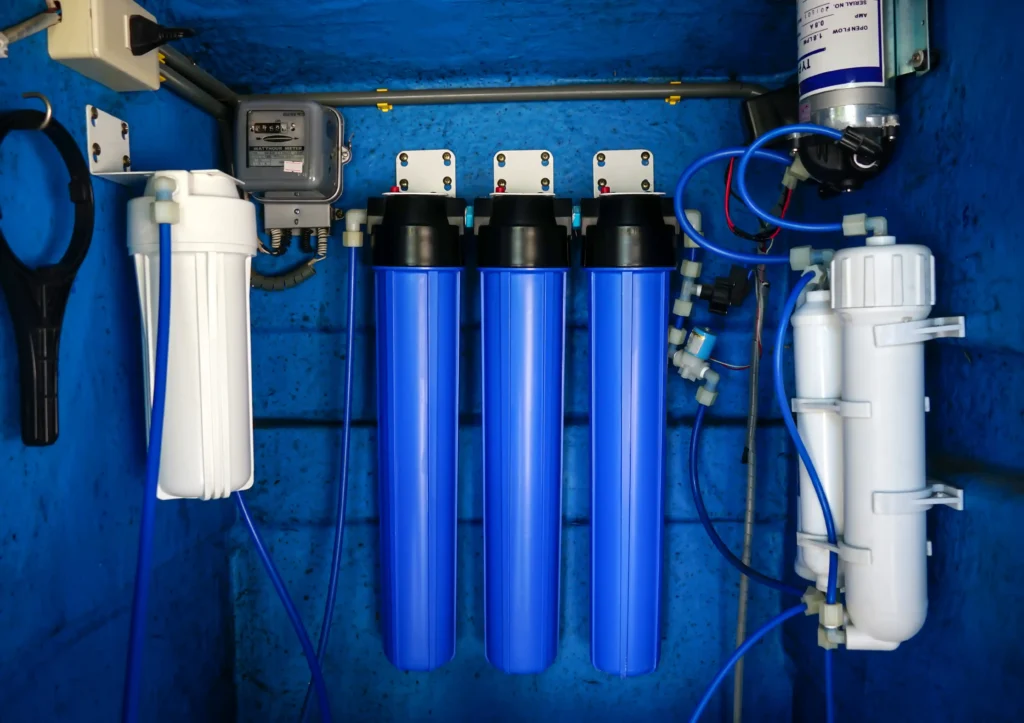
If you are confused between a whole house reverse osmosis system and a water softener Dubai, here is the direct answer: a reverse osmosis system purifies water by removing contaminants, while a water softener only removes hardness minerals like calcium and magnesium. A whole house reverse osmosis system treats all the water entering your home, making it cleaner and safer for drinking, cooking, bathing, and appliance use.
What does a whole house reverse osmosis system do?
A water softener focuses only on hardness. A water softener removes calcium and magnesium that cause scale buildup.
It helps with:
- Preventing limescale on faucets and tiles
- Extending appliance lifespan
- Improving soap lather
- Reducing skin dryness caused by hard water
However, a water softener does not remove:
- Bacteria
- Heavy metals
- Chemicals
- Dissolved salts
- Bad taste or odour
Which system is better for your home?
If your issue is only hard water, choose a water softener. If your issue is contamination, high TDS, or unsafe water, choose a whole house RO system.
Here’s a simple comparison:
- Choose a water softener if:
- You see white scale buildup
- Soap doesn’t lather well
- Appliances clog due to mineral deposits
Choose a whole house reverse osmosis water system if:
- Your water tastes salty or metallic
- TDS levels are high
- You rely on well water
- You want purified water from every tap
Is a whole house reverse osmosis system for well water necessary?
Yes, if your well water has high TDS, iron, nitrates, or contamination.
Well water often contains:
- Sediment
- Iron and manganese
- Agricultural runoff
- Dissolved salts
A whole house reverse osmosis system for well water ensures safer, cleaner water throughout the home.
What are the main differences?
Water softener:
- Removes hardness minerals only
- Does not purify water
- Lower cost
- Lower water waste
- Improves appliance lifespan
Whole house RO system:
- Removes a wide range of contaminants
- Improves taste and odour
- Provides purified water everywhere
- Higher installation cost
- Produces some wastewater
A whole house reverse osmosis filter system is a complete purification solution, while a softener is a targeted hardness solution.
FAQs
Yes, if your water has high contamination or high TDS levels. It protects your health, plumbing, and appliances by providing purified water throughout your home.
Yes. A whole house reverse osmosis water system is installed at the main water line, treating all incoming water before it reaches faucets and appliances.
RO systems cannot effectively remove:
- Certain volatile organic compounds (without a carbon pre-filter)
- Some pesticides (if not pre-treated)
- Dissolved gases like hydrogen sulphide (requires additional filtration)
With proper maintenance:
- RO membrane: 2–5 years
- Pre-filters: 6–12 months
- System lifespan: 10–15 years
Regular servicing ensures long-term performance.
A whole house reverse osmosis system is designed for complete water purification, while a water softener only addresses hardness. If your concern is scaling, choose a softener. If your concern is water safety, taste, contamination, or well water quality, a whole house RO system is the better solution.
Understanding your water quality through testing is the first step in making the right choice for your home.