
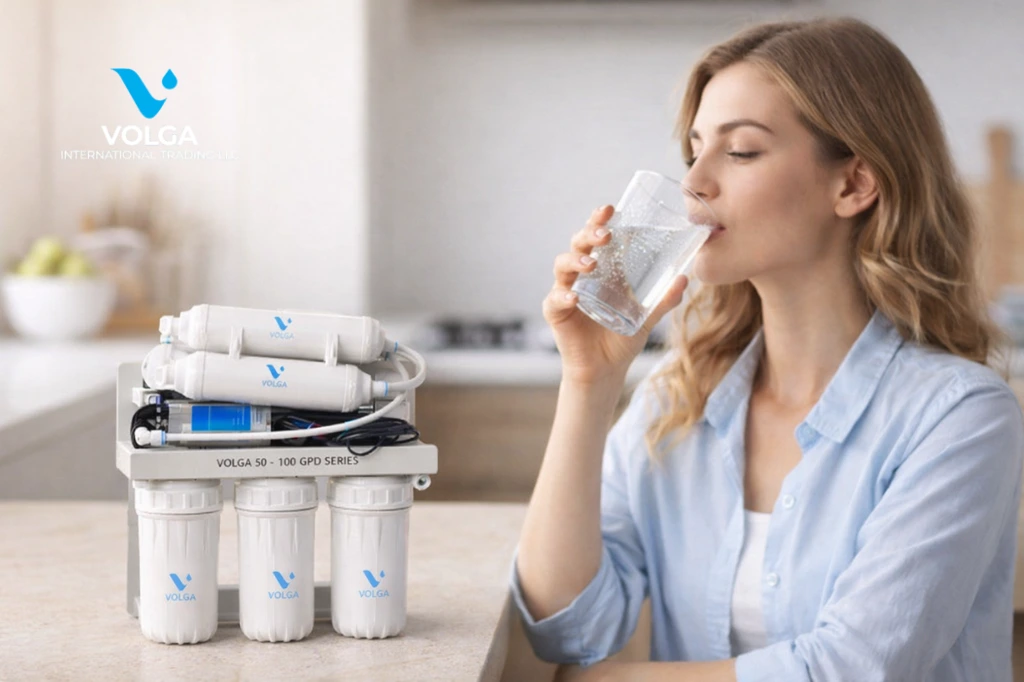
The safety and health of water are not something we can compromise on. There is a carefully designed process behind every drop of clean and safe water that we use daily. Filtration in water treatment is an important factor that makes sure the water is free of visible particles, harmful microorganisms, and chemicals that contaminate it. Proper filtration ensures water is safer, tastes better, and is better for everyday use. Take a quick dive into this guide that explains the major types of water filtration and how they address specific issues to provide better quality water.
Types of filtration in water treatment systems
Different ways of filtering water are needed for different sources. The following are the most common types, and each one has a specific purpose.
1. Mechanical filtration :
This is the most common and widely used filtration method.
- Eliminates visible particles such as dirt, sand, and silt
- Make use of materials like gravel, sand or cartridge filters.
- It is common in water distribution systems for municipal plant and residential system
2. Activated carbon filtration :
The primary purpose for activated carbon filtering is to enhance the flavor and smell of water.
- Absorbs organic compounds, chlorine and a variety of chemicals
- Improves the aroma and taste of drinking water.
- Most often, it is used in residential and commercial structures
3. Biological filtration :
This method makes use of beneficial bacteria to break down pollutants.
- It targets organic waste and microbes
- Common in aquaculture and wastewater treatment
- Sustainable and environmentally friendly
4. Membrane filtration (RO and UF) :
Membrane systems provide advanced purification.
- This includes ultrafiltration and reverse osmosis.
- Eliminates from the water dissolved salts, bacteria and viruses
It is most common in areas that have salty or hard water. It is most effective when combined with products such as Water Softener Dubai.
How filtration in water treatment works in practice?
In actual water treatment facilities filtering is not an isolated procedure. It’s a mix of a variety of actions that improve the overall quality and security of the water that is used every day. First, the water is passed through screening and sediment removal to get rid of larger, visible impurities like sand and dirt. After that, it is cleaned to eliminate suspended and dissolved impurities that impact the clarity and quality. This is a step that works in conjunction with disinfection in water treatment to eliminate harmful bacteria and microorganisms. From a practical point of view, good filtration helps the entire system run better and shields equipment downstream from damage as well as wear and tear.
Why is filtration important in water treatment?
Understanding the importance of filtration in water treatment will help you understand the reason why it’s a must-have.
- Enhances the taste, clarity, and odour of water
- Minimises the damage to plumbing and appliances
- Guarantees adherence to water safety regulations
Cost considerations and maintenance
When planning a system, filtration in water treatment cost depends on several factors:
- Type of water filtration technology used
- Quality of the water and amount of contamination
- System size and how often it requires maintenance
Choosing the right filtration system helps save money in the long run and provides high-quality water every day.
Conclusion
Healthy water does not mean water that looks clear. It means making sure that water is safe for daily consumption and that it does not damage appliances in the long run. Filtration in water treatment ensures that the water is in compliance with certain standards for health and also helps maintain the effectiveness of equipment and systems for longer periods of time. Anywhere water is used, whether it’s at home, in the office or in commercial spaces Filtration helps guarantee continuous, high-quality water throughout the day through the utilization of filtration technologies and systems.
FAQs
The four types of water filtering include mechanical, activated carbon, biological, and membrane filtration.
The process of water filtration involves the passage of water through specific types of membranes or media which trap particles, chemicals and bacteria, leaving more pure water.
The 5 steps of water filtration are screening, coagulation and flocculation, sedimentation, filtration, and disinfection.
Filtration helps get rid of harmful particles and enhances the water quality, ensuring better taste, odour, and safety.